Google Reviews
How to Get More Google Reviews for Your Business
August 9, 20268 min read

Table of Contents
A practical, step-by-step guide to generating more authentic Google reviews for your local service business — without resorting to shortcuts that violate Google’s policies.
Google reviews are one of the most visible trust signals a local business can have. When a potential customer searches for a roofer, plumber, or dentist in their area, the businesses that show up with a strong star rating and a healthy volume of recent reviews tend to earn the click. But most local businesses serve far more happy customers than their review count reflects — not because customers are unwilling to leave reviews, but because nobody is consistently asking them.
This guide walks through a practical, policy-compliant approach to getting more Google reviews. No gimmicks, no shortcuts that put your Business Profile at risk — just the systems and habits that work.
When customers compare local businesses online, reviews are often the first thing they look at. A business with 200 reviews and a 4.8-star rating simply looks more established and trustworthy than one with 12 reviews, even if the quality of work is identical.
Reviews also contribute to how visible your business is in local search results. While review count and rating are not the only factors, they are signals that help Google understand which businesses are active, reputable, and serving customers well.
It usually isn’t that customers are unwilling. The problem is operational. Asking for reviews is easy to forget when you’re busy running jobs, managing a team, and handling the hundred other things that come with operating a local service business. And even when you do remember to ask, following up with customers who didn’t respond the first time is even harder.
The businesses that consistently get reviews aren’t necessarily doing better work — they have a system that makes requesting and following up automatic.
Before you can collect reviews, you need a verified Google Business Profile. If you haven’t claimed yours yet, go to Google Business Profile and complete the verification process.
Once verified, make sure your profile is complete and accurate:
A complete profile gives customers confidence and makes it easier for them to leave a review once they land on your page.
Timing is everything. The best time to ask for a review is when the customer’s positive experience is fresh — right after a job is completed, a service is delivered, or a problem is solved.
For service businesses, this often means sending a review request within a few hours of finishing a job. The customer is still thinking about the great service they received, and they’re more likely to take action.
Keep it simple and genuine. A good review request acknowledges the customer, references the specific service, and makes leaving a review as easy as possible:
Hi [Customer Name], thanks for choosing [Business Name] today! If you have 30 seconds, we’d really appreciate a quick Google review about your experience. Here’s the link: [Your Review Link]
Notice what this doesn’t do: it doesn’t ask for a 5-star review, it doesn’t offer an incentive, and it doesn’t pressure the customer. It simply makes it easy for a happy customer to share their experience.
Most customers intend to leave a review but get distracted. A single follow-up reminder can significantly increase your response rate — but it needs to be gentle and spaced appropriately.
A good rule of thumb is to wait 2–3 days after the initial request before following up. If they still don’t respond, let it go. You don’t want to create a negative experience by over-messaging.
Five Star Harvester is a done-for-you review service: we run your review requests, follow-ups and reply drafts so your team doesn't have to chase reviews.
$297/month · No setup fee · Cancel anytime
The fewer steps between your request and the review form, the better. Send a direct link to your Google review page — not a link to your homepage where the customer has to figure out where to go.
On mobile, SMS is particularly effective because the customer can tap the link and be on the review page in seconds. Text messages have high open rates and feel more personal than email.
Responding to reviews — both positive and negative — shows that you’re engaged and that you value feedback. It also signals to future customers that there’s a real person behind the business.
For positive reviews, a simple thank you is enough. For negative reviews, acknowledge the concern, apologize if appropriate, and offer to make it right. Never argue with a customer in a public review response.
The biggest mistake local businesses make is treating reviews as a one-time push. You ask a few customers, get a handful of reviews, and then stop. A few months later, your review profile looks stale.
The businesses with the strongest review profiles have a system that runs continuously — every completed job triggers a review request, every non-responder gets a follow-up, and every review gets a response. That’s what makes the difference over time.
If you’re looking for a way to automate this process, Five Star Harvester can handle review requests, follow-ups, and responses automatically so you can focus on running your business.
Getting more Google reviews doesn’t require a complicated strategy. It requires a consistent system: ask at the right moment, make it easy, follow up once, and respond to every review. Do that for every customer, and your review profile will grow steadily over time.
If you want to take the manual work out of the process, consider automating your review requests with a tool like Five Star Harvester. The right system can turn review collection from a chore into something that runs in the background while you focus on your work.
There is no single threshold that applies to every market, but consistency matters more than any specific number. A steady stream of recent reviews signals to both customers and search engines that your business is active and trusted. Focus on generating reviews regularly rather than hitting a particular count all at once.
No. Google’s review policies prohibit paying for reviews or offering incentives in exchange for reviews. Doing so can result in reviews being removed or your Business Profile being penalized. Instead, focus on asking happy customers at the right moment and making the process easy.
It depends on your customer volume and how consistently you ask. Businesses that request reviews after every completed job typically see meaningful growth within 30–90 days. The key is building a repeatable system rather than relying on one-off efforts.

Practical scripts, timing tips, and follow-up strategies for asking your customers for Google reviews in a way that feels natural and genuine — not pushy.
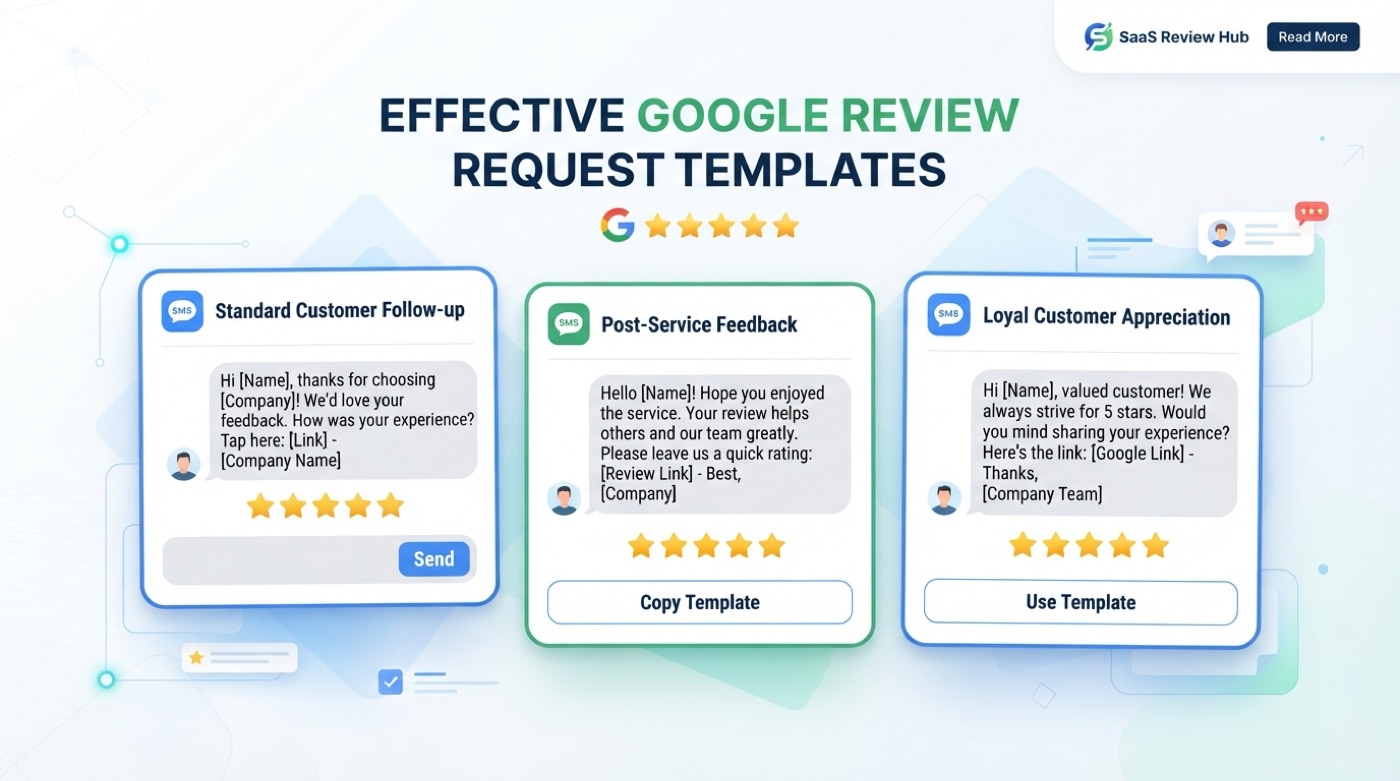
Ready-to-use Google review request templates for SMS, email, and in-person asks. Copy, customize, and start collecting more reviews from your customers.
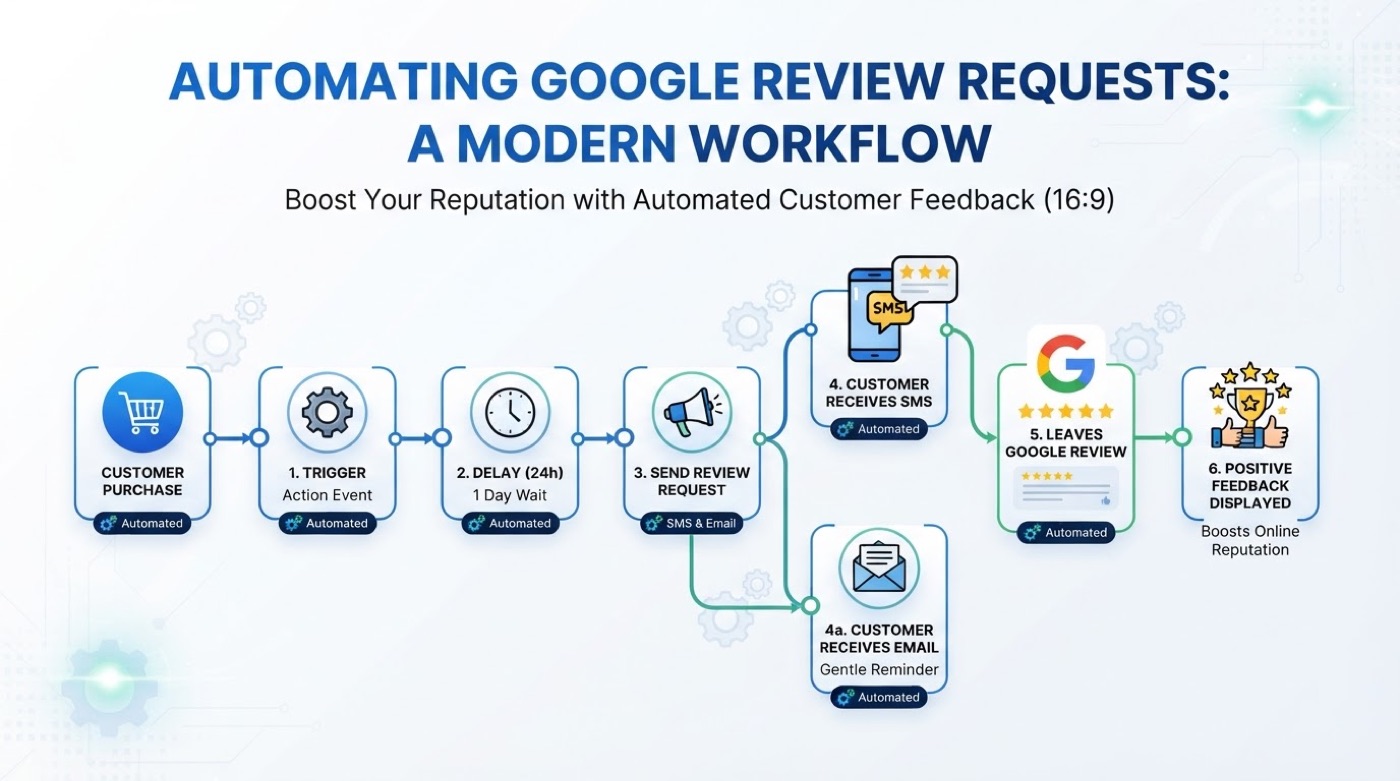
Learn how to set up automated Google review requests that trigger after every completed job, follow up with non-responders, and grow your review profile on autopilot.